1) Drink at least 8 glasses of water every day.
2) Cut some beet root into small pieces and grind them. Squeeze juice from beet root and massage to your face for 5 minutes. Shower after 10 minutes with mild soap or gram flour.
3) Mix sandalwood powder with rose water and add 4 to 5 drops of milk in it and apply on to your face and body. Shower after 15 minutes with warm water.
4) Mix honey in water and drink daily in the morning to keep your skin shiny and smooth.
5) Warm honey and mix with lemon juice and apply on to face. Wash after it dry.
6) Mix Turmeric, sandal powder and olive oil and apply to body. Shower after 10 minutes.
7) Massage your skin with milk. Milk has moisturizer, it will keep your skin smooth.
8) Use humidifiers and keep room temperature moderate to keep your skin away from dryness.
9) Hot water blushes your skin and you don't feel fresh unless you have bath with little cold water. If you have shower for a longtime, dead skin will be automatically be removed. Do not rub with towel, be gentle on your skin.
10) Take food which contains more A and C vitamin.
11) Grate carrot and boil. Massage that mixture to body to get fair and smooth skin.
12) For natural bleaching: - mix milk and lemon juice. The milk will break as soon as you mix the lemon juice in it. Use that mixture to massage on your body. It works as natural bleaching.
13) Mix turmeric and cream on the top of milk, massage that mixture to body.
14) If you go into sun your skin will lost the fair ness. To get your skin color to normal take equal quantities of cucumber juice and tomato juice and apply on to skin. Shower after 10 minutes.
15) Massage mustard oil to your skin for 5 minutes and have shower with gram flour or mild soap.
16) Mix cream on the top of milk and all-purpose flour and apply that paste on to your skin avoid eyes, eyebrows and lips. Shower after 5 minutes. This will make skin smooth.
17) Mix curds (yogurt) with wheat flour and apply to your skin and take shower after 5 minutes.
18) Grind rose petals and mix with cream on the top of milk and apply to your body. Shower after 10 minutes.
19) Scaly skin is a result of fluorine deficiency. Fluorine is the anti-resistant element of the human body, the absence of which creates problems in the blood and spleen. Since cooking and heating foods destroys fluorine, it is better to eat uncooked raw fruits and vegetables. Other foods rich in fluorine are goat milk and cheese, rye flour, avocados, sea plants and cabbage, cream whey and cottage cheese.
20) Wrinkle skin is a result of Sodium deficiency and makes skin sticky. Cucumbers are ideal for combating and preventing sodium deficiency because they are not only high in sodium, but also help in keeping the body cool, a great summer's treat.
21) Skin rashes are the result of silicon deficiency. To avoid pus and rashes, eat plenty of sprouts, alfalfa, barley, tomatoes, spinach, strawberries and figs.
22) Skin eruptions are the result of Chlorophyll. And are found in wheat grass and other green leafy vegetables
Thursday, January 28, 2010

Wednesday, January 27, 2010
Characteristics of Healthy Hair and Hair Care....
Characteristics of Healthy Hair


You hair is healthy if your hair is-
• Thick and dense.
• Fine and silky, which means not too oily or rough.


• Lustrous, shiny and glossy.
• Pliable, capable of setting and styling.
• Full-bodied and not limp or lank.


Normally there are three kinds of hair types.
Normal hair is shiny, not greasy and easy to manage.
Oily hair feels greasy even a short while after shampooing and tends to look flat sometimes. Usually who have oily skin have oily hair.


Dry hair looks thin and rough it is susceptible to tangles and damage( many times the ends are dry and split). It has a non-slippery feel and does not slide through your fingers.


How to care different types of hair?
Oily hair. A hair care regime for oily hair would aim at removing excess oil and exfoliating the skin cells. The emphasis is on cleansing and toning. Cleansing involves washing and rinsing the hair. It is also essential to rinse the shampoo off thoroughly with cold water after washing with warm water.


Dry hair. The main cause of dry hair is lack of sebum in the scalp, which makes the hair coarse and brittle and susceptible to damage. Poor nutrition, exposure to sun and over use of heated appliances can also rob the hair of valuable moisture. The aim of a hair care regime for dry hair is to replenish oil and moisture in the hair. So, the emphasis is on conditioning.


Frequent shampooing should be avoided. A generous oil application the night before washing your hair is recommended, as it will condition the hair scalp.


If your hair is very dry and damaged, apply a hydrating mask once a week. Avoid vigorous drying with a towel after washing your hair. Instead gently squeeze excess water from the hair and blot dry with a towel.

You hair is healthy if your hair is-
• Thick and dense.
• Fine and silky, which means not too oily or rough.

• Lustrous, shiny and glossy.
• Pliable, capable of setting and styling.
• Full-bodied and not limp or lank.

Normally there are three kinds of hair types.
Normal hair is shiny, not greasy and easy to manage.
Oily hair feels greasy even a short while after shampooing and tends to look flat sometimes. Usually who have oily skin have oily hair.
Dry hair looks thin and rough it is susceptible to tangles and damage( many times the ends are dry and split). It has a non-slippery feel and does not slide through your fingers.

How to care different types of hair?
Oily hair. A hair care regime for oily hair would aim at removing excess oil and exfoliating the skin cells. The emphasis is on cleansing and toning. Cleansing involves washing and rinsing the hair. It is also essential to rinse the shampoo off thoroughly with cold water after washing with warm water.

Dry hair. The main cause of dry hair is lack of sebum in the scalp, which makes the hair coarse and brittle and susceptible to damage. Poor nutrition, exposure to sun and over use of heated appliances can also rob the hair of valuable moisture. The aim of a hair care regime for dry hair is to replenish oil and moisture in the hair. So, the emphasis is on conditioning.

Frequent shampooing should be avoided. A generous oil application the night before washing your hair is recommended, as it will condition the hair scalp.

If your hair is very dry and damaged, apply a hydrating mask once a week. Avoid vigorous drying with a towel after washing your hair. Instead gently squeeze excess water from the hair and blot dry with a towel.
What Your Nails Say about Your Health ??
Nails and Health: Read the Signs
Did you know your nails can reveal clues to your overall health? A touch of white here, a rosy tinge there, or some rippling or bumps may be a sign of disease in the body. Problems in the liver, lungs, and heart can show up in your nails. Keep reading to learn what secrets your nails might reveal.

Pale Nails
Very pale nails are sometimes linked to aging. But they can also be a sign of serious illness, such as:
• Anemia
• Congestive heart failure
• Diabetes
• Liver disease
• Malnutrition

White Nails
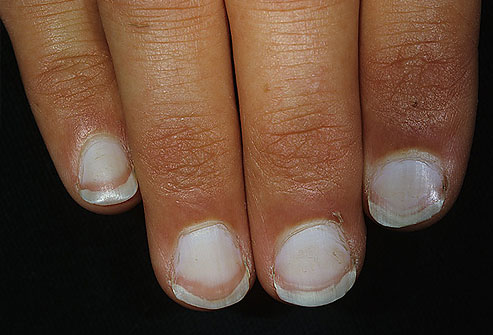
If the nails are mostly white with darker rims, this can indicate liver problems, such as hepatitis. In this image, you can see the fingers are also jaundiced, another sign of liver trouble.
Yellow Nails
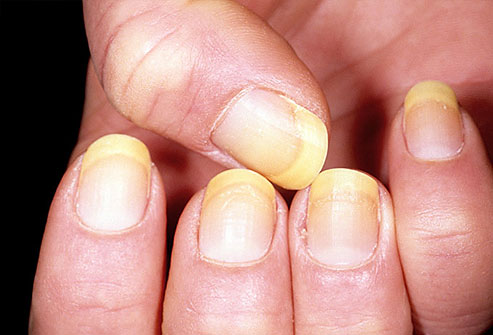
One of the most common causes of yellow nails is a fungal infection. As the infection worsens, the nail bed may retract, and nails may thicken and crumble. In rare cases, yellow nails can indicate a more serious condition such as severe thyroid disease or psoriasis.
Bluish Nails
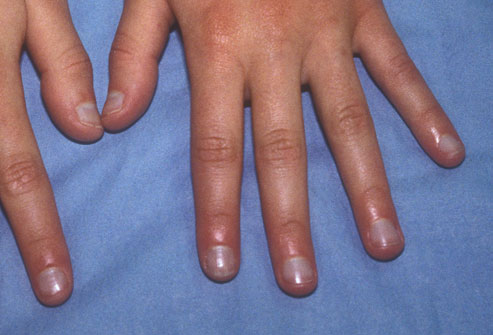
Nails with a bluish tint can mean the body isn’t getting enough oxygen. This could indicate an infection in the lungs, such as pneumonia.
Rippled Nails
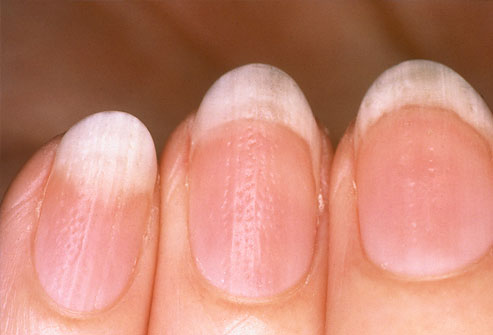
If the nail surface is rippled or pitted, this may be an early sign of psoriasis or inflammatory arthritis. Psoriasis is a skin condition that starts in the nails 10% of the time.
Cracked or Split Nails
Dry, brittle nails that frequently crack or split have been linked to thyroid disease. Cracking or splitting combined with a yellowish hue is more likely due to a fungal infection.
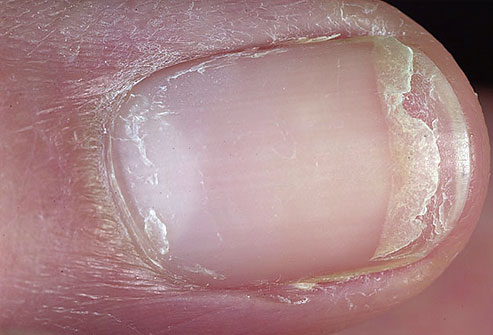
Puffy Nail Fold
If the skin around the nail appears red and puffy, this is known as inflammation of the nail fold. It may be the result of lupus or another connective tissue disorder.
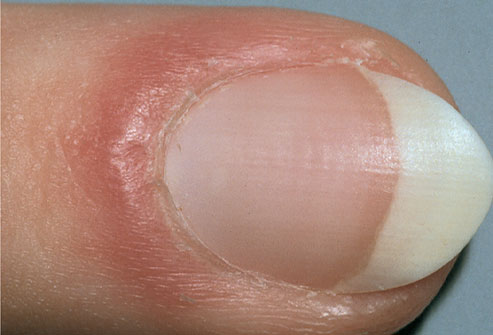
Dark Lines Beneath the Nail
Dark lines beneath the nail should be investigated as soon as possible. They are sometimes caused by melanoma, the most dangerous type of skin cancer.
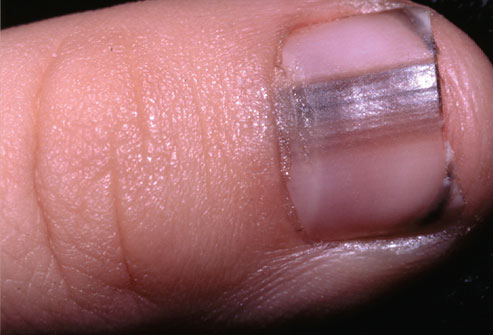
Gnawed Nails
Biting your nails may be nothing more than an old habit, but in some cases it’s a sign of persistent anxiety that could benefit from treatment. Nail biting or picking has also been linked to obsessive-compulsive disorder. If you can’t stop, it’s worth discussing with your doctor.
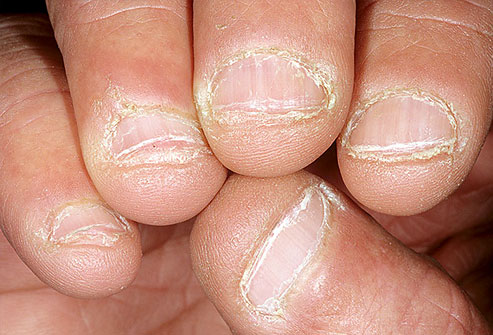
Nails Are Only Part of the Puzzle
Though nail changes accompany many conditions, these changes are rarely the first sign. And many nail abnormalities are harmless -- not everyone with white nails has hepatitis. If you’re concerned about the appearance of your nails, see a dermatologist.
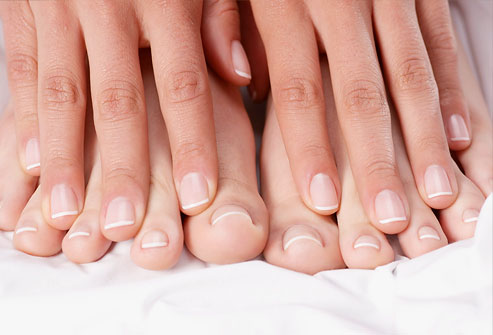
Did you know your nails can reveal clues to your overall health? A touch of white here, a rosy tinge there, or some rippling or bumps may be a sign of disease in the body. Problems in the liver, lungs, and heart can show up in your nails. Keep reading to learn what secrets your nails might reveal.
Pale Nails
Very pale nails are sometimes linked to aging. But they can also be a sign of serious illness, such as:
• Anemia
• Congestive heart failure
• Diabetes
• Liver disease
• Malnutrition
White Nails
If the nails are mostly white with darker rims, this can indicate liver problems, such as hepatitis. In this image, you can see the fingers are also jaundiced, another sign of liver trouble.
Yellow Nails
One of the most common causes of yellow nails is a fungal infection. As the infection worsens, the nail bed may retract, and nails may thicken and crumble. In rare cases, yellow nails can indicate a more serious condition such as severe thyroid disease or psoriasis.
Bluish Nails
Nails with a bluish tint can mean the body isn’t getting enough oxygen. This could indicate an infection in the lungs, such as pneumonia.
Rippled Nails
If the nail surface is rippled or pitted, this may be an early sign of psoriasis or inflammatory arthritis. Psoriasis is a skin condition that starts in the nails 10% of the time.
Cracked or Split Nails
Dry, brittle nails that frequently crack or split have been linked to thyroid disease. Cracking or splitting combined with a yellowish hue is more likely due to a fungal infection.
Puffy Nail Fold
If the skin around the nail appears red and puffy, this is known as inflammation of the nail fold. It may be the result of lupus or another connective tissue disorder.
Dark Lines Beneath the Nail
Dark lines beneath the nail should be investigated as soon as possible. They are sometimes caused by melanoma, the most dangerous type of skin cancer.
Gnawed Nails
Biting your nails may be nothing more than an old habit, but in some cases it’s a sign of persistent anxiety that could benefit from treatment. Nail biting or picking has also been linked to obsessive-compulsive disorder. If you can’t stop, it’s worth discussing with your doctor.
Nails Are Only Part of the Puzzle
Though nail changes accompany many conditions, these changes are rarely the first sign. And many nail abnormalities are harmless -- not everyone with white nails has hepatitis. If you’re concerned about the appearance of your nails, see a dermatologist.
Simple Steps to Reduce Hair Loss

If you are experiencing hair loss it is important you act now and not wait until it becomes noticeable and start to affect the way you look and feel about yourself. Whether you are a male or female, few things will affect confidence and esteem like a noticeably balding head.
Going bald will make you look, feel and actually act older. Your personality and attitude will change to reflect your dampened ego. You will become less outgoing and less apt to approach members of the opposite sex. Your going bald can dictate the way you are seen and treated by others and yourself.
I know, for at the tender age of 21 I started rapidly loosing my hair and all those negative changes started to happen in my life. It was sheer determination and the dread of looking like my old grand dad this early that turned things around for me.
If you are experiencing hair loss, here are some things I learned that helped me with my battle to stop from going bald and retake control of my life.
1. Check with your doctor.Sometimes hair loss can be a symptom of disease. Thyroid disease, Lupus and Diabetes are two examples of illnesses known to case balding. Check with your doctor and be sure there is not a more serious matter at hand.
2. Watch your diet.Eating correctly will affect not only the overall health of your body, it will also affect the health of your hair and scalp. Maintaining a proper diet is critical for keeping healthy locks.
3. Check your stress levels.Anxiety and stress are common causes of hair loss. Regardless of how hectic life may get, you should take every necessary step to reduce tension and limit its affect on your body. If you must, use yoga, meditation or some other form of stress reduction technique.
4. Careful what you use on your head.Many of todays' hair care products contain chemicals that are harsh and can actually be damaging. Check the ingredients of your shampoos, dyes, perms and conditioners. Choose products that substitute chemicals with natural substances that are milder and which stimulate the scalp and encourage growth.
These few tips will go far in avoiding further hair loss and may even reverse the process. Do your research and take all necessary steps. Going bald can be painful but there are many products on the market that will help. Just know that the issue can be successfully addressed and the earlier you act the better.
Don't wait until it's too far gone. There are products that can immediately stop hair loss and quickly re grow your hair.
Tuesday, January 26, 2010


Your Eye Brows Says A lot...


Arched Brow
The brow of beauty. You're born to the good things in life. Indicates harmony in relationships.

Upswept Brow
A positive, optimistic brow. The sign of an activist brow.

Downswept Brow
Seductive. But could signal weakness to others.

Short Brow
Gives the appearance of youth..and can be an asset. Shows independence and ambition.

Level Brow
The brow of a career woman who also enjoys sports and the outdoor.

Angular Brow
Indicates a dramatic personality. .. creative, brilliant in financial matters.

Rounded Brow
The brow of a businesswoman or perhaps an entertainer.
Foods and Vitamins to Beautify Your Skin
When it comes to caring for your skin, vitamins and good nutrition can be just as beneficial as a good skin care treatment. Vitamins are important in keeping your skin looking and feeling healthy. They can also help prevent and treat any problem areas and skin disorders. This article discusses:
* What are the vitamins that keep your skin healthy?
* Which food products/items contain vitamins for a healthy skin?
* Learn more on supplements that helps your skin to stay healthy
When it comes to caring for your skin, vitamins and good nutrition can be just as beneficial as a good skin care treatment. Vitamins are important in keeping your skin looking and feeling healthy. They can also help prevent and treat any problem areas and skin disorders. A bad diet that is lacking in vitamins can make your skin blotchy and lifeless. When looking at your overall skin care, pay attention to your diet and ensure it includes the right vitamins good for skin care.
Vitamins and Minerals
Here are some of the best minerals and vitamins for healthy skin. Including these skin rejuvenating vitamins in your diet will help keep your skin looking healthy and free from problems.
VITAMIN A
Vitamin A is a very good vitamin for healthy skin. It helps strengthen the skin and repair tissues. It can be taken in foods, as a supplement or as a topical cream. Vitamin A can help prevent dry skin and acne. It can also be used to treat wrinkles.
VITAMIN E
Vitamin E is an antioxidant that can help prevent free radical damage to the skin. Vitamin E is a good vitamin to take when your skin is suffering some damage from the sun or other factors.
VITAMIN C
Vitamin C helps with healing wounds and other damage to the skin. There is some evidence to suggest it may rejuvenate the skin. Vitamin C will also help the immune system fight off illnesses.
VITAMIN D
Vitamin D is an antioxidant that may play a role in skin pigmentation.
VITAMIN B
Vitamin B helps keep your skin tone healthy. It is also a good vitamin for relieving stress, and so it may prevent some of the skin problems (like eczema) that can be caused by stress. There are a number of different vitamins in the vitamin B group.
* Vitamin B1 is an antioxidant that helps rid the body of toxins. It can also assist circulation.
* Vitamin B2 helps keep the skin healthy. It can also help prevent acne.
* Vitamin B3 improves circulation.
* Vitamin B5 helps reduce stress.
* Vitamin B6 helps keep the immune system healthy.
ZINC
Zinc helps the skin's natural healing process. It is good in preventing the over-production of sebum, which will also help clear up acne. Zinc also helps the immune system.
Foods to Eat for Clear Skin
Skin vitamins can be taken as nutritional supplements or they can be incorporated into your diet. Here are some foods good for your skin.
VITAMIN A
Vitamin A can be found in the following foods:
* Eggs
* Whole milk
* Liver
* Carrots
* Mango
* Spinach
* Breakfast cereal
VITAMIN B
Vitamin B can be found in the following foods:
* Wheat germ
* Oatmeal
* Whole wheat
* Bran
* Whole brown rice
* Dairy products
* Milk
* Liver
* Kidney
* Fish
* Eggs
VITAMIN E
Vitamin E can be found in the following foods:
* Almonds
* Sunflower seeds
* Peanut butter
* Hazelnuts
* Safflower oil
* Spinach
* Broccoli
* Mango
VITAMIN C
Vitamin C can be found in the following foods:
* Oranges
* Grapefruit
* Mandarins
* Lettuce
* Spinach
* Green peppers
* Strawberries
* Tomatoes
* Cabbage
VITAMIN D
Vitamin D can be found in the following foods.
* Milk
* Fortified rice
* Fortified margarine
* Salmon
* Tuna
* Liver
* Cheese
Sunlight can also provide the body with vitamin D.
ZINC
Zinc can be found in the following foods.
* Dairy products
* Beans and lentils
* Yeast
* Nuts
* Seeds
* Cereals
* Pumpkin seeds
All of these foods contain good skin vitamins. Foods to eat for clear skin include anything from the list of foods for vitamin A, vitamin C and vitamin E. Vitamin C foods are good foods to tighten skin.
Supplements
Sometimes our diet does not contain all the vitamins and nutrients we need to keep our skin looking healthy. The following dietary supplements can help prevent and treat problems, based on skin type.
* Dry skin. Good supplements for people with dry skin include evening primrose oil, vitamin A, beta carotene, vitamin B-complex, vitamin B12, vitamin E, zinc and selenium.
* Oily skin.
Rate this Article
Excellent
Good
Average
Bad
Terrible
rate
Current Rating
Good supplements for people with oily skin include evening primrose oil, vitamin A, beta carotene, vitamin B complex, vitamin B12, vitamin E, zinc and flaxseed oil.
* Combination skin and Normal skin. Good supplements for people with combination skin and normal skin include evening primrose oil, vitamin A, beta carotene, vitamin B complex, vitamin B12, vitamin E and zinc.
Conclusion
Eating vitamins good for skin, along with the right skin care treatment, can help keep your skin looking its very best, as well as reducing and preventing problem areas. The skin vitamins mentioned here are beneficial for everyone who wants healthy, problem-free skin
* What are the vitamins that keep your skin healthy?
* Which food products/items contain vitamins for a healthy skin?
* Learn more on supplements that helps your skin to stay healthy
When it comes to caring for your skin, vitamins and good nutrition can be just as beneficial as a good skin care treatment. Vitamins are important in keeping your skin looking and feeling healthy. They can also help prevent and treat any problem areas and skin disorders. A bad diet that is lacking in vitamins can make your skin blotchy and lifeless. When looking at your overall skin care, pay attention to your diet and ensure it includes the right vitamins good for skin care.
Vitamins and Minerals
Here are some of the best minerals and vitamins for healthy skin. Including these skin rejuvenating vitamins in your diet will help keep your skin looking healthy and free from problems.
VITAMIN A
Vitamin A is a very good vitamin for healthy skin. It helps strengthen the skin and repair tissues. It can be taken in foods, as a supplement or as a topical cream. Vitamin A can help prevent dry skin and acne. It can also be used to treat wrinkles.
VITAMIN E
Vitamin E is an antioxidant that can help prevent free radical damage to the skin. Vitamin E is a good vitamin to take when your skin is suffering some damage from the sun or other factors.
VITAMIN C
Vitamin C helps with healing wounds and other damage to the skin. There is some evidence to suggest it may rejuvenate the skin. Vitamin C will also help the immune system fight off illnesses.
VITAMIN D
Vitamin D is an antioxidant that may play a role in skin pigmentation.
VITAMIN B
Vitamin B helps keep your skin tone healthy. It is also a good vitamin for relieving stress, and so it may prevent some of the skin problems (like eczema) that can be caused by stress. There are a number of different vitamins in the vitamin B group.
* Vitamin B1 is an antioxidant that helps rid the body of toxins. It can also assist circulation.
* Vitamin B2 helps keep the skin healthy. It can also help prevent acne.
* Vitamin B3 improves circulation.
* Vitamin B5 helps reduce stress.
* Vitamin B6 helps keep the immune system healthy.
ZINC
Zinc helps the skin's natural healing process. It is good in preventing the over-production of sebum, which will also help clear up acne. Zinc also helps the immune system.
Foods to Eat for Clear Skin
Skin vitamins can be taken as nutritional supplements or they can be incorporated into your diet. Here are some foods good for your skin.
VITAMIN A
Vitamin A can be found in the following foods:
* Eggs
* Whole milk
* Liver
* Carrots
* Mango
* Spinach
* Breakfast cereal
VITAMIN B
Vitamin B can be found in the following foods:
* Wheat germ
* Oatmeal
* Whole wheat
* Bran
* Whole brown rice
* Dairy products
* Milk
* Liver
* Kidney
* Fish
* Eggs
VITAMIN E
Vitamin E can be found in the following foods:
* Almonds
* Sunflower seeds
* Peanut butter
* Hazelnuts
* Safflower oil
* Spinach
* Broccoli
* Mango
VITAMIN C
Vitamin C can be found in the following foods:
* Oranges
* Grapefruit
* Mandarins
* Lettuce
* Spinach
* Green peppers
* Strawberries
* Tomatoes
* Cabbage
VITAMIN D
Vitamin D can be found in the following foods.
* Milk
* Fortified rice
* Fortified margarine
* Salmon
* Tuna
* Liver
* Cheese
Sunlight can also provide the body with vitamin D.
ZINC
Zinc can be found in the following foods.
* Dairy products
* Beans and lentils
* Yeast
* Nuts
* Seeds
* Cereals
* Pumpkin seeds
All of these foods contain good skin vitamins. Foods to eat for clear skin include anything from the list of foods for vitamin A, vitamin C and vitamin E. Vitamin C foods are good foods to tighten skin.
Supplements
Sometimes our diet does not contain all the vitamins and nutrients we need to keep our skin looking healthy. The following dietary supplements can help prevent and treat problems, based on skin type.
* Dry skin. Good supplements for people with dry skin include evening primrose oil, vitamin A, beta carotene, vitamin B-complex, vitamin B12, vitamin E, zinc and selenium.
* Oily skin.
Rate this Article
Excellent
Good
Average
Bad
Terrible
rate
Current Rating
Good supplements for people with oily skin include evening primrose oil, vitamin A, beta carotene, vitamin B complex, vitamin B12, vitamin E, zinc and flaxseed oil.
* Combination skin and Normal skin. Good supplements for people with combination skin and normal skin include evening primrose oil, vitamin A, beta carotene, vitamin B complex, vitamin B12, vitamin E and zinc.
Conclusion
Eating vitamins good for skin, along with the right skin care treatment, can help keep your skin looking its very best, as well as reducing and preventing problem areas. The skin vitamins mentioned here are beneficial for everyone who wants healthy, problem-free skin
6 Most Unhealthy Foods

The 6 Most Unhealthy Foods You Should Avoid at All Costs
Some people swear by the mantra "everything in moderation," but the truth is, some foods, no matter how good they taste, are better off left alone.
If you need a little motivation to stay away from these most unhealthy foods, consider that four of the 10 leading causes of death in the United States are related to diet (diabetes, heart disease, cancer and stroke). And if you're looking to improve yours, cutting back on these six foods is a great place to start.
1. Soda.

An average can of soda has 10 teaspoons of sugar, 150 calories, 30 to 55 mg of caffeine, artificial food colors and sulphites. Diet sodas have the even-more-unhealthy artificial sweeteners. A major part of the problem is that sodas have become a staple in many people's diets. A study in the journal Pediatrics found that 56 percent to 85 percent of children consume at least one soft drink a day, and 20 percent of adolescent males drink four or more sodas a day.
"Parents and health officials need to recognize soft drinks for what they are -- liquid candy -- and do everything they can to return those beverages to their former role as an occasional treat," says the Center for Science in the Public Interest (CSPI), a U.S. consumer group. In fact, CSPI has recently petitioned the Food and Drug Administration (FDA) calling for cigarette-style warnings on soft drinks to warn people of their potential health risks (weight gain, diabetes, tooth decay and more).
You knew it was coming ... French fries contain at least two types of cancer-causing compounds.
2. Potato chips and French fries.

These popular snack foods contain acrylamide, a known carcinogen and neurotoxin that is formed when foods are baked or fried at high temperatures. "I estimate that acrylamide causes several thousand cancers per year in Americans," said Clark University research professor Dale Hattis.
When CSPI conducted tests on some popular brands of French fries and chips, they found that the acrylamide in a large order of fast food fries was at least 300 times the amount allowed by the Environmental Protection Agency (EPA) in a glass of water.
"There has long been reason for Americans to eat less greasy French fries and snack chips," said CSPI executive director Michael F. Jacobson. "Acrylamide is yet another reason to eat less of those foods."
An Up-and-Coming Absolute Worst Food ... Don't Try This at Home

This one wasn't popular enough to make the top-six list yet, but it's growing in popularity ... and growing fast. The deep-fried Twinkie, first invented in a Brooklyn restaurant by brothers Clint and Rocky Mullen, is making its rounds to country fairs and carnivals around the country.
Here's how they're made:
• Twinkies are chilled, rolled in flour, dipped in tempura batter and fried for a minute or two.
• The frying process melts the cream center, which becomes infused throughout the cake, giving it a pudding-like texture.
• For the finale, they're sprinkled with powdered sugar and served with chocolate or berry sauce.
If you're not into Twinkies, don't despair. The Mullen brothers also sell deep-fried candy bars--Snickers, 3 Musketeers and Milky Way--to suit even the most discerning tastes.
But that's not all. These foods also contain trans fats, the artery-clogging fat that's been linked to raising bad cholesterol (and lowering the good kind), and increasing the risk of heart disease, diabetes, stroke and cancer.
Doughnuts: A somehow tasty concoction of refined sugar, flour, trans fats and artificial flavors with zero nutritional value.
3. Doughnuts.

Tasty, yes. But break a doughnut down and you'll find nothing more than refined sugar and flour, artificial flavors and partially hydrogenated oil that's loaded with trans fats. They have no redeeming qualities whatsoever.
"When it comes to health, the only thing good about them is the hole," said Carla Wolper, nutritionist at the New York Obesity Research Center.
4. Coffee Cake and Other Baked Goods.

This category actually includes all varieties of baked goods, including packaged cake and biscuit mixes. What makes these foods so bad is that they almost always contain high amounts of trans fats and a host of other unsavory additives including corn syrup, preservatives and artificial flavors and colors. In fact, commercial baked goods typically contain more trans fats than any other food because not only are they often made with hydrogenated oils, they're fried in them too.
If you're not ready to give up your morning treat just yet, opt for baked goods from your local bakery (which is less likely to use hydrogenated oil for a long shelf-life and is likely to use butter instead of margarine, which typically contains trans fat) or make them yourself.
A hot dog now and then can be reasonably healthy if you seek out a nitrite/nitrate-free variety.
5. Luncheon Meats/Hot Dogs.

Processed meats like these (and others including sausages, bacon, pepperoni and other processed meats) contain a carcinogenic precursor ingredient known as sodium nitrite (sodium nitrate is closely related).
"Sodium nitrite is a dangerous, cancer-causing ingredient that has no place in the human food supply," says nutritionist Mike Adams, author of the Grocery Warning Manual.
And, according to a University of Hawaii study that followed nearly 200,000 people for seven years, people who consumed the most processed meats (hot dogs and sausage) showed a 67 percent increased risk of pancreatic cancer over those who consumed little or no meat products.
Here's some good news: you can find various varieties of nitrite/nitrate-free meats in any health food store.
6. Canned Soup.

Here we're talking about the traditional, canned soups you find in your grocery store. This may come as a surprise, but most canned (and packaged) soups have high levels of trans fats, sodium and artificial preservatives like MSG. Just one cup of canned soup can have almost 1,000 milligrams of salt (and most people eat more than one cup), which is tons considering dietary guidelines recommend consuming no more than 2,400 milligrams for the entire day.
There are healthy options out there, particularly natural, organic brands, but be sure to read the label. The alternative is, of course, to make your own homemade variety.
Weak People Can Try On There Own Risk..

Subscribe to:
Posts (Atom)